On February 1, the Israeli Chamber Project will play at Carnegie Hall in New York City. Here is the program:
Continue Reading
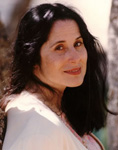 Montserrat Figueras, the Catalan early music soprano, died November 23 at her home in Bellaterra, Spain. She was 69.
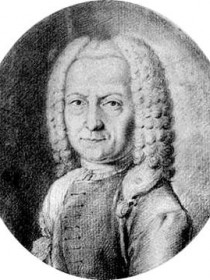 One of the fascinating aspects of Jewish music in the Italian Renaissance is the fact that just as Jewish composers such as Salamone De Rossi brought the music of the church to the synagogue, Christian composers such as Benedetto Giacomo Marcello brought the synagogue to the church. The Venetian-born Marcello (1686-1739) led a dual career as a well-known aristocratic politician and noted composer of Italian church music. In his masterpiece, Estro poetico-armonico (1724-1727), a setting of the first fifty Psalms for voices, figured bass, and various instrumental soloists, he drew directly on contemporary Jewish religious music for inspiration. In search of traces of the lost music of antiquity, he turned to the Venetian Jewish community, transcribing and setting some 11 Hebrew melodies from the Tedesco tradition (Italian Jews of Ashkenazi descent), that he believed derived from the ancient Temple in Jerusalem. In his score, he carefully printed them from right to left to follow the logic of the Hebrew language.
Subscribe via Email
- Subscribe to the Pro Musica Hebraica Blog by email. Enter your email address to be notified of new posts. You may unsubscribe any time.
The Right Representation of the Holocaust in Art
-
Recent Posts
- Saved: A trove of Jewish music that defied Nazis
- The ARC Ensemble performs the suppressed works of Ukrainian master composer
- The music of the historic Zimro Ensemble at Pittsburgh Jewish Music Festival
- Yiddish Classical Music in America
- Review: WEINBERG Symphonies – Nos 2 & 21,‘Kaddish’ (Gražinytė-Tyla)